The function of a protein is determined by its shape. The shape of a protein is determined by its primary structure (sequence of amino acids). The sequence of amino acids in a protein is determined by the sequence of nucleotides in the gene (DNA) encoding it. The function of a protein (except when it is serving as food) is absolutely dependent on its three-dimensional structure. A number of agents can disrupt this structure thus denaturing the protein.
- changes in pH (alters electrostatic interactions between charged amino acids)
- changes in salt concentration (does the same)
- changes in temperature (higher temperatures reduce the strength of hydrogen bonds)
- presence of reducing agents (break S-S bonds between cysteines)
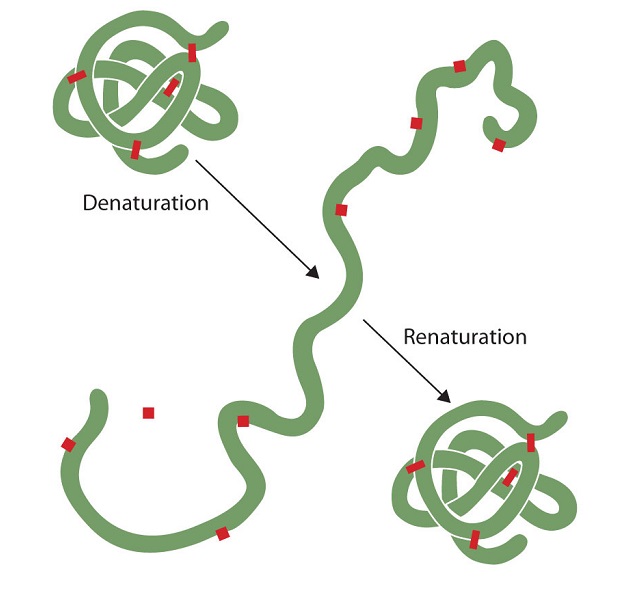
Often when a protein has been gently denatured and then is returned to normal physiological conditions of temperature, pH, salt concentration, etc., it spontaneously regains its function (e.g. enzymatic activity or ability to bind its antigen). This tells us that the protein has spontaneously resumed its native three-dimensional shape. Moreover, this ability is intrinsic; no outside agent was needed to get it to refold properly.
However, there are enzymes that add sugars to certain amino acids, and these may be essential for proper folding. These proteins, called molecular chaperones, enable a newly-synthesized protein to acquire its final shape faster and more reliably than it otherwise would.
Chaperones
Although the three-dimensional (tertiary) structure of a protein is determined by its primary structure, it may need assistance in achieving its final shape.
- As a polypeptide is being synthesized, it emerges (N-terminal first) from the ribosome and the folding process begins.
- However, the emerging polypeptide finds itself surrounded by the watery cytosol and many other proteins.
- As hydrophobic amino acids appear, they must find other hydrophobic amino acids to associate with. Ideally, these should be their own, but there is the danger that they could associate with nearby proteins instead — leading to aggregation and a failure to form the proper tertiary structure.
Despite the importance of chaperones, the rule still holds: the final shape of a protein is determined by only one thing: the precise sequence of amino acids in the protein. And the sequence of amino acids in every protein is dictated by the sequence of nucleotides in the gene encoding that protein. So the function of each of the thousands of proteins in an organism is specified by one or more genes.