Ribosomes are the protein-synthesizing machines of the cell. They translate the information encoded in messenger RNA (mRNA) into a polypeptide.
Shape, size and function
Ribosomes are roughly spherical with a diameter of ~20 nm, they can be seen only with the electron microscope. Figure
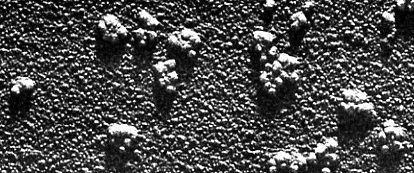
In eukaryotes, ribosomes that synthesize proteins for use within the cytosol (e.g., enzymes of glycolysis) are suspended in the cytosol. The specific ribosomes that synthesize proteins destined for secretion (by exocytosis), the plasma membrane (e.g., cell surface receptors), and lysosomes. These ribosomes are attached to the cytosolic face of the membranes of the endoplasmic reticulum. As the polypeptide is synthesized, it is extruded into the interior (lumen) of the endoplasmic reticulum. Then, before these proteins reach their final destinations, they undergo a series of processing steps in the Golgi apparatus.
Ribosomes that synthesize 13 of the proteins destined for the inner membrane of mitochondria are found within the mitochondrion itself and are quite different in structure from the others. The ribosomes of bacteria, eukaryotes, and mitochondria differ in many details of their structure (Table
| Bacterial (70S) | Eukaryotic (80S) | Mitochondrial (55S) | |
|---|---|---|---|
| Large Subunit | 50S | 60S | 39S |
| rRNAs (1 of each) |
23S (2904 nts) | 28S (4700 nts) | 16S (1560 nts) |
| 5S (120 nts) | 5S (120 nts) | ||
| 5.8S (160 nts) | |||
| Proteins | 35 | 47 | 50 |
| Small Subunit | 30S | 40S | 28S |
| rRNA | 16S (1542 nts) | 18S (1900 nts) | 12S (950 nts) |
| Proteins | 20 | 33 | 30 |
| S values are the sedimentation coefficient: a measure of the rate at which the particles are spun down in the ultracentrifuge. S values are not additive. nts = nucleotides. | |||