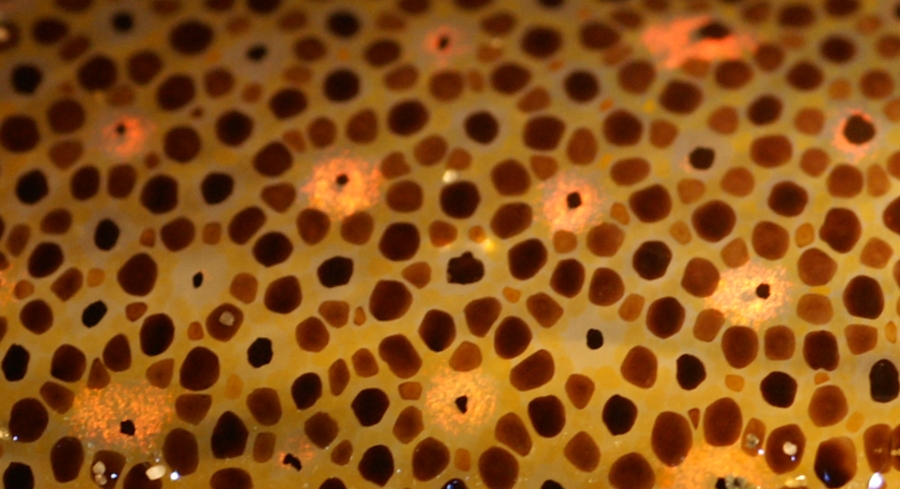
Chromatophores are irregularly shaped, pigment-containing cells. If the pigment is melanin, they are called melanophores. Chromatophores are common in crustaceans, cephalopod mollusks, lizards and amphibians, and some fishes.
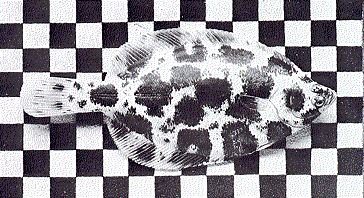
Chromatophores are often used for camouflage. Figure 3.22.1 shows a winter flounder resting on a checkerboard pattern. The chromatophores of cephalopods change size (expand and contract) as a result of activity of muscle fibers and the motor neurons that terminate at them. In crustaceans and amphibians, the chromatophores have a fixed shape. Color change comes about through the dispersal (darkening) or aggregation (lightening) of granules within the cell. This is under hormonal control.