Several kinds of evidence support the chemiosmotic theory of ATP synthesis in chloroplasts. When isolated chloroplasts are illuminated, the medium in which they are suspended becomes alkaline — as we would predict if protons were being removed from the medium and pumped into the thylakoids (where they reduce the pH to about 4.0 or so). The interior of thylakoids can be deliberately made acid (low pH) by suspending isolated chloroplasts in an acid medium (pH 4.0) for a period of time. When these chloroplasts are then transferred to a slightly alkaline medium (pH 8.5), that is, one with a lower concentration of protons and given a supply of ADP and inorganic phosphate (Pi), they spontaneously synthesize ATP. No light is needed.
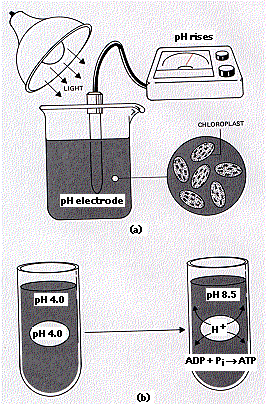
This is a direct evidence that a gradient of protons can be harnessed to the synthesis of ATP.